Reporting To Our Shareholders from a Major Asset Management Industry Summit
Recently, a cross-section of senior leaders at FCA Corp and our Commonwealth International Series Trust mutual fund group conducted a due diligence and learning journey to Dallas, Texas for the Ultimus Fund Solutions 2026 Client Summit – hosted by our fund administrator and investment operations strategic partner.
The Ultimus Client Summit provided an informative industry event designed to offer an insightful update on the State of the Asset Management Industry for their asset manager and RIA clients. The Summit’s carefully crafted agenda addressed major industry issues, challenges, and opportunities by inviting financial industry experts to share insights and perspectives, along with numerous breakout sessions to allow for a substantial sharing of ideas, experiences, best practices, and exploring innovative strategies.
We thought it was worthwhile to have five senior people from our organization and our trustee base attend this kind of program. It is interesting to note that each representative of our group, besides being financial industry leaders, is a trained attorney and CPA.
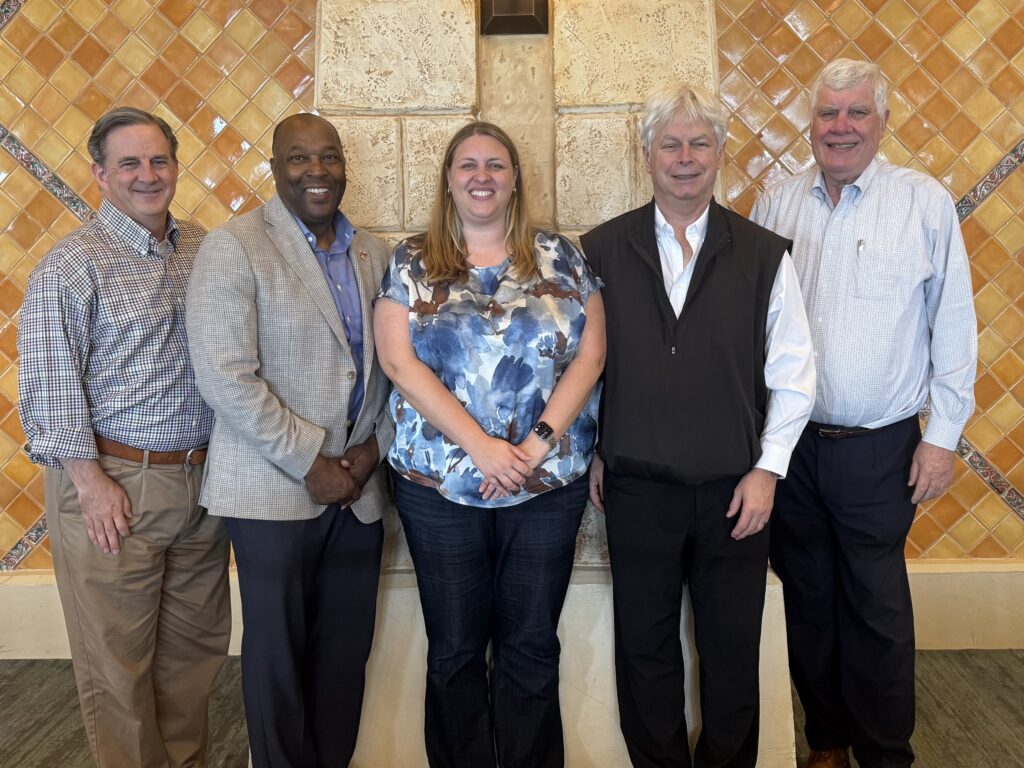
Photo (left to right): John Akard Jr., Commonwealth Fund Trustee; Anthony Box Jr., Commonwealth Fund Trustee; Christina Doherty, FCA Corp Vice President and Director of Financial Planning; William LeVay, FCA Corp Chief Compliance Officer; Robert Scharar, FCA Corp Founder and CEO.
While the conference covered a great number of asset management industry topics, we were particularly focused on the shared knowledge on AI usage and trends, not only for our internal operations and the evolution of information management, but also on how AI is transforming the financial service industry worldwide. A key consensus was that the industry will be very different than it is today in five years – not 10 or 15 years.
A key goal was to learn more from technology experts there about artificial intelligence (AI) and cybersecurity systems. One, how do we make sure that we are protecting our clients’ data? Two, how can we make our firm’s operations and workflows more efficient so we can deliver more value to our clients? Three, how does all this emerging technology help us improve our knowledge bases in terms of our day-to-day servicing of our clients.
A key learning we took away from the Summit was that AI is a tool to help process data and make decisions, but it still requires human direction, data governance, and a strategic understanding of the ultimate goals to direct it effectively.
Of particular value was a two-part interactive breakout session and engaging tabletop exercise simulating a real-world cyber incident. Attendees were asked to openly participate and consider “What would you do?” The panel walked through initial responses and key decision points in managing a cyber crisis and demonstrated effective response strategies. Attendees gained deeper insights into mitigating risks, improving preparedness, and safeguarding organizational integrity during a cyber-attack.
Transforming the Future with AI was a popular topic, but it also brought out the risk to businesses of embarking on the journey without a well-thought-out plan. Crucial aspects include: commitments to staff training, investment in technology infrastructure, and managing the risk to your business of what and how you decide to use AI and security.
As platforms have stopped being interchangeable, the question is which AI tool should we use? That depends on what level of your business you are using it in, for what purpose, and how integrated you want to be.
A few key takeaways:
- Cutting-edge technologies like Generative AI and Natural Language Processing (NLP) can transform this data into actionable insights, empowering more informed decision-making and uncovering tradeable opportunities.
- AI Feature Arms Race is a dead end as AI capabilities are commoditizing. True Institutional advantage comes from architecture. What differentiates is: Workflow Integration embedded in how you actually work; Data Connectivity to your systems of record; Institutional Governance of security, compliance, audit trails; and Continuous Model Optimization where you are always using the best AI for each task. No single model wins every task: The answer is multi-model routing.
- Selection of the AI platform is becoming a standalone expertise.
- Start with processes that allow you to get meaningful productivity or other benefits upfront and allow you to build literacy among your team as users.
- Be realistic about the time frames needed to implement.
- If AI in your operation is moving data or making decisions without a human signing off, are your internal controls and audit framework keeping up?